Research Newsletter
Q4/2025
Learn about new PA research, find research support opportunities, and get AAPA Research updates. We hope you continue to check in to see the new content coming each quarter.
Upcoming Events
Research Connections
Join us on December 11, 7 p.m. ET for a free virtual networking session. Experts will discuss best practices for conference submissions and how to engage students, so come exchange ideas and insights with fellow PAs and PA students!
Click here to register! Act fast, space is limited.
Related links:
Want to highlight your research? Reach out to us at [email protected].
PAs Going Beyond
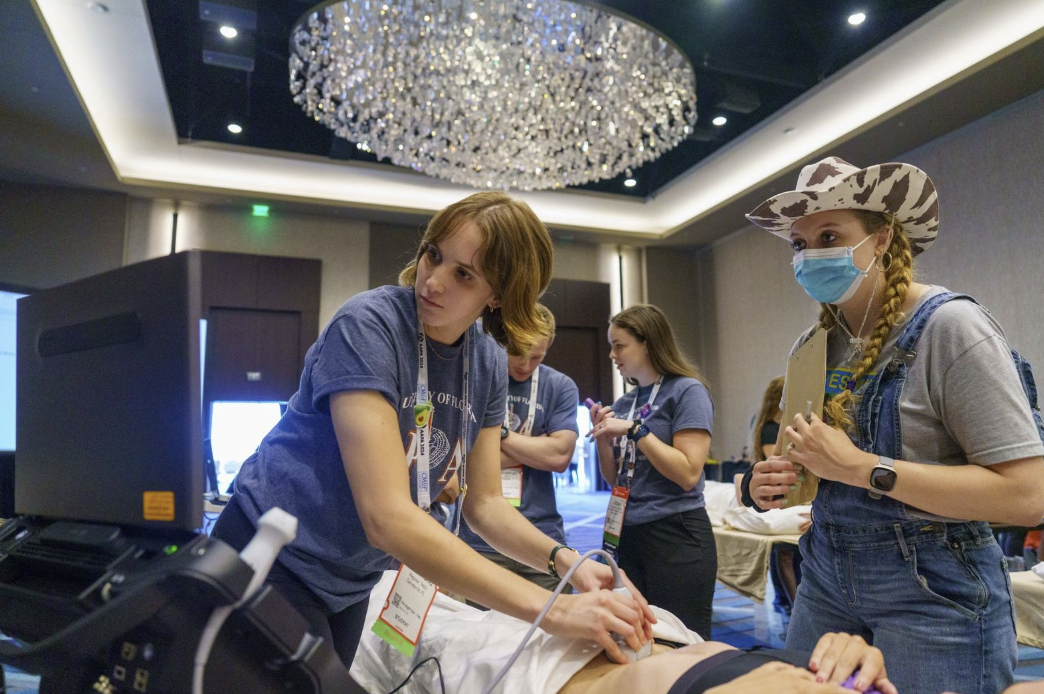
In this “PAs Going Beyond” spotlight, we talked to Michael Breunig, MPAS, PA-C, Patrick Bafuma, PA-C, and Janelle Bludorn, MS, PA-C, about their recent publication on recommendations from a panel of PA-ultrasound experts (who were also required to be educators in some capacity) on what ultrasound applications should be included in PA education.
Q: What prompted you to embark on this research?
A: While more and more PA programs are implementing point-of-care ultrasound (POCUS), the current state of POCUS in PA education is quite varied – some programs have a single workshop, others have fully integrated curricula. There was no expert consensus specific to PAs on what exactly should be taught. At the same time, international groups had put out recommendations for medical schools, but PAs were left without a clear framework. Given the growing role of POCUS in practice and the increasing expectation that graduates are familiar with it, we felt a need to define minimum standards and priorities for PA education. We feel this work provides a realistic and clear framework for which PA programs can model their POCUS curricula.
Q: What changes have you made to your clinical practice as a result of the work?
A: This project reinforces much of what we already do. However, when on shift with learners, I also became more deliberate about teaching POCUS during daily practice. Specifically, we’ll take a more protocolized approach – i.e., let’s utilize the RUSH exam and go through each step one at a time and discuss what pertinent information it gives us. Aside from clinical practice, the results of this research have prompted us to examine what we are teaching PA students about POCUS in our own programs as well as for multi-program events.
Q: Advice to PAs who are interested in engaging in this type of work at their own practice?
A: Start simple and start structured. Pick high-yield scans, heart, lungs, abdomen, vascular access. Stick to the protocols and practice, practice, practice! Patients are quite welcoming of PA’s who state, “I’m trying to gain more practice doing ultrasound, would you be ok if we took a look for a few minutes?”
Find your community: connect with POCUS interest groups, attend workshops, and find a local mentor. Get in touch with other departments and individuals who use POCUS – they often are EM and ICU clinicians. Ask to shadow them and scan alongside them while they are on shift. Get in touch with AAPA Constituent Organizations- the Society of Point of Care Ultrasound, PAs in Critical Care, SEMPA, or PAOS. If you’re a PA educator, reach out to others who have published on PA POCUS, connect with other POCUS educators at PAEA, join the Ultrasound in PA education Facebook page – we all LOVE to talk about this.
And finally, integrate ultrasound into workflow – longitudinally. When you’re teaching cardiac exams in PA education, add a POCUS element. When you’re on a clinical shift, minimize the friction and mental barrier of “going to get the machine.” Just park the ultrasound next to you and take it into every exam room and work POCUS into the encounter naturally.
Research Activities at AAPA 2026
If you are also passionate about PA research, the call for research submissions for AAPA 2026 in New Orleans is now open! You can download the submission guidelines and apply today! Stay in the know and learn more about the research activities here. For questions, reach out to [email protected].
Related links:
Digital ePosters from AAPA 2020 to AAPA 2025
JAAPA Collections and AAPA 2025 Poster Abstracts
AAPA 2025 Research in Action and Research Rounds On Demand
Newest Research on the PA Profession
Recently published interesting data? Won a research grant? Share your insights on why research is paramount to the PA profession. Reach out to us at [email protected] to highlight your work.
Here are a few articles we think you should see:
This study investigates factors associated with burnout among PAs using the Conservation of Resources theory as a framework and robust national data, finding that declining quality of working conditions is the strongest factor associated with increased burnout.
Characteristics of family medicine physician associates/assistants in the United States
This study examines the employment characteristics of physician assistants (PAs) in family medicine (FM) in the United States, highlighting their critical role in mitigating the healthcare access crisis, particularly in underresourced and rural areas.
Resource highlight
AAPA collaborates with experts to offer free CME so PAs and PA students can learn about research and enhance their clinical work. In August 2025 we launched new course offerings related to clinical trials, using R, grant writing, and more. Learn more here, and be on the lookout for our new set of courses next year!
In How to Write a Strong Conference Proposal, Sean Kolhoff, PhD, discusses the challenges of overcoming imposter syndrome during the writing process and techniques that can be used to match your areas of research interest to a targeted audience.
For more related resources, visit this article on presenting your research effectively.
Latest AAPA Publications
Thanks to your survey responses, we can include the latest data in our research reports, publications, News Central articles, and extended data briefs. Check out a sample of our latest publications below:
The Role of PAs in the Management of Patients with Alzheimer’s Disease and Other Dementias
This brief synthesizes findings from a national survey and a focus group to identify key challenges and policy opportunities to empower PAs across the dementia care continuum.
Want more publications? Visit Research and Publications page.