PA Jared Wallace Aims to Change the Trajectory of Diabetes in the Rural Community of Kenai, Alaska
“I found a community that has inspired me to build a practice that truly makes a difference.”
September 25, 2025
By Jennifer Walker
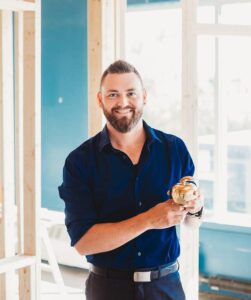
Physician associate Jared Wallace opened Odyssey Family Practice to provide family medicine, urgent care, and occupational health services to the underserved rural community of Kenai, Alaska. One of the practice’s innovative programs is Blood Sugars and Beyond, which takes a comprehensive approach to managing diabetes with the goal of preventing future complications related to the disease.
“We’re looking at where patients stand on this progression of diabetes, their risk of developing potential complications, and how we can intervene,” said Wallace, adding that his practice serves 500 patients in this program. “The goal is that we’re not talking about amputations or blindness or cardiovascular events in 10 years. We’re hoping to change the trajectory of their diabetes course now.”
This program was created after Wallace—who has a board certification in advanced diabetes management—saw a need for diabetes education and support services in Kenai. There, 11.6% of the more than 7,500 residents have the disease, which is higher than the national average. This is a benefit of working in rural settings: PAs have the opportunity to offer access to even more healthcare services for their patients. “In rural healthcare, you can have a wide impact and help a lot of people with a lot of different conditions,” Wallace said.
[See Wallace and other PAs who go beyond on AAPA’s new Nationwide PA Impact Map!]
The Draw of Alaska
In middle school, Wallace broke his foot after crashing his four-wheeler on the farm where he grew up in Washington State, and he was treated at the hospital by a surgical team that included a PA. “From that moment on, I realized how big of a role PAs play in healthcare and medicine—and I realized what I wanted to do,” he said.
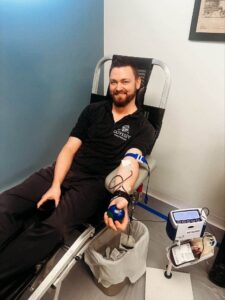
Wallace attended the PA program at the University of Philadelphia College of Osteopathic Medicine. For his clinical rotation in primary care, he traveled to Family Medical Clinic in Soldotna, Alaska. “Like many people who go to Alaska, I was wowed by the scenery, the fishing, the hunting, the people,” he said. After his graduation in 2009, Wallace was offered a position at the same clinic. He and his then-fiancée Rhi Wallace, now business partner, drove cross country to start their new life in Alaska.
After four years in Soldotna, Wallace moved to Kenai to work with MediCenter. There, he had the opportunity to open a satellite clinic in North Kenai. He was involved in every aspect of the process, from the design of the space and the logistics of staffing to the ordering of medical supplies and equipment—including gauze, exam tables, and everything in between. “It gave me the opportunity to start a clinic from scratch without the financial risk,” Wallace said. “Then, when I went to open my own practice, it was very much the same, except the financial risk was mine.”
Opening a Family Practice Location
Kenai is on the road system in Alaska, and the community has a few primary care providers and a hospital. But beyond that, healthcare access is limited. Wallace chose to open Odyssey Family Practice to offer more healthcare services for residents within their hometown. In 2019, he left his full-time position, negotiated with a real estate investment company to lease half of a 7,000-square-foot warehouse, and began renovations to that part of the building. They took longer than expected, so Wallace worked at a physician’s private practice three days a week.
“We almost didn’t get off the ground because financially, we weren’t seeing the patients or bringing in the money that we anticipated,” he said. “We actually had to take out a second business loan to bridge the gap. But once we opened full-time, I had already been in town for about 10 years, so we had a pretty large patient base already. The clinic filled up pretty quickly.”
In only six years, the practice has grown significantly. In the beginning, Wallace was the sole provider, and the practice focused on family medicine and occupational health services. Today, Odyssey Family Practice serves between 6,000 and 8,000 people annually, and Wallace’s staff includes four full-time PAs, one contractual PA, and a collaborative physician. In 2023, Wallace expanded into the other half of the warehouse and added urgent care services. He also started the Blood Sugars and Beyond program.
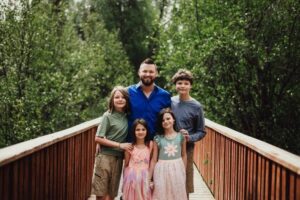
In early 2025, Odyssey Family Practice reached a major accomplishment when they won “Best Family Practice on the Kenai Peninsula” in the 2025 Peninsula Clarion Readers’ Choice Awards, in which they were up against larger hospital practices and federally qualified health centers.
Filling a Need for Diabetes Management Services
While working at his previous position in Alaska, Wallace realized there was a strong need for providers who could help their patients understand diabetes. National statistics confirm this: Diabetes is 17% more common in rural settings compared to urban locations, yet 62% of rural communities do not have access to diabetes education and support programs (U.S. Centers for Disease Control and Prevention).
“Blood sugars are important—that’s the hub of diabetes—but I think it’s also important to understand diabetes-related complications, and how to test and treat and monitor for that,” said Wallace.
Through Blood Sugars and Beyond, Wallace offers several tests to look for complications related to diabetes, including quantitative sudomotor testing to screen for diabetic neuropathy, which damages the nerves in the lower extremities, causing pain and numbness and increasing risk of amputation. Wallace has a RetinaVue imager in the office to screen for diabetic retinopathy, which affects the blood vessels in the retina and can lead to blindness. For pre-diabetics, he draws C-peptide levels, then compares the results to their insulin levels to determine current insulin resistance and predict their likelihood of developing Type II diabetes in the future. Following testing, Wallace talks with patients for about 45 minutes to review the results and come up with an individualized plan for management. For treatment, Wallace often uses continuous glucose monitors to help educate patients about glucose trends and how interventions, such as diet, can affect their diabetes. The immediate feedback from these devices often inspires patients to make changes.

For one particular patient, a man in his 40s, Wallace ordered an Ankle-Brachial Index (ABI) to screen for peripheral artery disease, which reduces blood flow to the legs. The results of the ABI were abnormal, so Wallace followed up with an arterial doppler ultrasound to gauge the level of blood flow in the patient’s arteries, as well as a few other tests. With the results, Wallace then developed a plan to control the patient’s blood sugars, which included medication, diet, and exercise recommendations. Now, after two years in the program, the patient has lost weight and his A1C has dropped to 5.8.
“We were able to identify where the patient stood and intervene early,” Wallace said. “I knew I wanted to serve where healthcare wasn’t just needed—it was vital. In rural, underserved Kenai, I found a community that inspired me to build a practice that truly makes a difference.”
Jennifer Walker is a freelance writer in Baltimore, MD. Contact Jennifer at [email protected].
You Might Also Like
PAs Help Expand Mental Health Services to Alaska’s Most Remote Communities
Improving Access to Healthcare in Alaska’s Rural Villages
PAs Aim to Close the Care Gap in Rural Areas of Tennessee
You might also like



Thank you for reading AAPA’s News Central
You have 2 articles left this month. Create a free account to read more stories, or become a member for more access to exclusive benefits! Already have an account? Log in.