PAs Help Expand Mental Health Services to Alaska’s Most Remote Communities
PAs at Rural Psychiatry Associates travel great distances to provide much needed care
By Dave Andrews
August 28, 2025
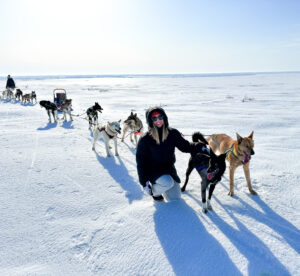
Alaska is aptly known as “The Last Frontier.” Sprawling across more than 663,000 square miles—over twice the size of Texas—the state is wild, vast, and largely uninhabitable. Towering mountains, frozen tundra, and rugged coastlines dominate much of the terrain, while extreme weather often isolates many who live in distant areas.
Yet, despite the challenges, Alaska’s population has continually grown in recent decades. And many residents live in small, remote communities spread over thousands of miles—places where consistent access to healthcare is either rare or nonexistent.
To help close that gap, PAs and physicians at Rural Psychiatry Associates travel to Alaska throughout the year to deliver in-person psychiatric care. Among them is Devon Anderson, MPAS, CAQ-Psyc, PA-C, a Salt Lake City-based psychiatric provider who makes the long journey north at least once every other month.
“There’s really nothing like it,” Anderson said. “These are not your typical rural, underserved communities. The cultural diversity of these regions and the environmental challenges they face make it very different from working in most other parts of the country.”

[See Anderson and other PAs who go beyond on AAPA’s new Nationwide PA Impact Map!]
Anderson works with Rural Psychiatry Associates, a healthcare organization that serves patients across several states. She’s part of a rotating team of providers that takes shifts in Alaska—typically for one week at a time—in regions so remote, they are only accessible by plane or boat.
A Long (But Rewarding) Journey
The three primary areas these providers serve—Nome, Bethel, and Dillingham—are small cities surrounded by even smaller villages, many with no year-round roads connecting them to the rest of the state. Reaching these destinations requires hours of travel and multiple flights.
Still, that sense of adventure and the chance to make a tangible difference is what drew Anderson to the role six years ago.
“I love the variety that comes with this position,” she said. “Things never get stale; they’re always changing, and the job is always interesting.”
The same sentiment is shared by one of Anderson’s colleagues, Mitchell Forbes, PA-C. Based in Chicago, Forbes typically travels to Alaska once a month, driven by a deep passion for rural healthcare and a love for the outdoors.
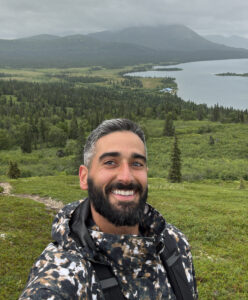
“It just feels like this population is especially appreciative of our services,” Forbes said. “They know we’re traveling great distances to see them, and healthcare services are obviously very limited, so I feel like we’re making a bigger impact.”
Even when not working one of their shifts in Alaska, the providers at Rural Psychiatry Associates continue to see their patients through telemedicine visits, just as they do with their other patients in different states. Leveraging the convenience of telemedicine has enabled the team of approximately 30 providers to expand access to care not only in Alaska, but also in North Dakota, Minnesota, South Dakota, Montana, and Utah.
Cultural Competency in Practice
Working in Alaska isn’t just about overcoming physical distance. Providers also need to navigate a rich and complex cultural landscape. Many of the patients they serve are from Alaska Native communities like the Inupiaq, Yup’ik, and Athabaskan.
“A lot of Alaskan Natives are very soft spoken and have different communication styles than what most providers are probably accustomed to,” said Forbes. “Some tend to utilize facial expressions and body language much more than verbal communication.”
Understanding those differences has been key to building trust. Forbes says he’s learned to slow his speech, soften his tone, and adapt his body language to help his patients feel more comfortable.

“Serving a population that tends to be more reserved has actually helped me refine how I interact with all my patients now,” he added. “It’s made me a more self-aware and patient provider.”
Facing Isolation and Its Consequences
Cultural sensitivity is only part of the challenge. Isolation itself is a major factor in Alaska’s mental health crisis. According to the Centers for Disease Control and Prevention, Alaska has the highest suicide rate of any U.S. state. The combination of long, dark winters, economic hardship, limited services, and substance use all contribute to a public health emergency.
Forbes says drug use is prevalent in many areas, and a large proportion of his patients are dealing with substance abuse and suicidal ideation. In his opinion, expanding access to healthcare services is a critical step to reducing the severity of such mental health issues.
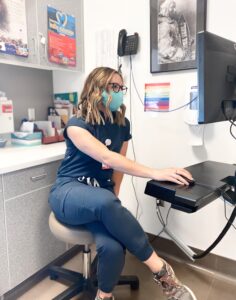
“These patients definitely have the motivation and desire to abstain from substance use,” Forbes said. “Unfortunately, there are many all across the state who can’t get the resources and support they need. So for me, it feels good to provide as many of them as possible with opportunities to achieve sobriety.”
The Right Fit
Making a positive impact in the lives of those who previously had very limited access to care is also what fuels Rebekah Laupp, PA-C, who joined Rural Psychiatry Associates in 2022. Throughout her trips to Alaska over the years, she says she has definitely seen improvements within these communities. And having the right providers in place is a big reason why.
“It’s such a great fit for us PAs because of the skills we bring to the table,” Laupp said. “It’s an opportunity to work in a very unique location and at a high level of autonomy, but also with continual access to guidance from our attendings who are based in other states.”
For many of these providers, the job offers more than just variety—it’s a calling. Forbes says the skills and relationships he’s developed in Alaska would be hard to replicate in a more conventional healthcare setting.
“I get to do everything I’ve wanted to do as a provider,” he said. “All the while getting to travel and having the opportunity to make a real impact. That gives me a lot of reassurance that this job is perfect for me.”
You May Also Like
Going Above and Beyond: One PA’s Mission to Deliver Critical Care by Air
From Language Barriers to Medication Access Challenges, Carlos Amaya Bridges Gaps in Mental Health Services
PA Sutton Became the First Altruistic Living Kidney Donor in South Carolina, and Now Leads the South Carolina Transplant Foundation
You might also like

Thank you for reading AAPA’s News Central
You have 2 articles left this month. Create a free account to read more stories, or become a member for more access to exclusive benefits! Already have an account? Log in.