Research Newsletter
Q3/2025
Learn about new PA research, find research support opportunities, and get AAPA Research updates. We hope you continue to check in to see the new content coming each quarter.
Upcoming Events
Research Connections
Join us Sept. 25, 7 p.m. ET for a free virtual networking session. Lucy W. Kibe, DrPH, MS, MHS, PA-C will discuss embedded community projects, so come exchange ideas and insights with fellow PAs and PA students!
Click here to register! Act fast, space is limited.
Related links:
Want to highlight your research? Reach out to us at [email protected].
PAs Going Beyond

In this “PAs Going Beyond” spotlight, we talked to Jessica Sidle, PA, who co-authored the study “Reducing Physician Burnout Through Workflow Redesign: A Quality-Improvement Initiative.” Driven by a passion for improving staff wellness, PA Sidle and colleagues administered the Maslach Burnout Inventory to all hospitalists at Huntington Hospital and established a multidisciplinary wellness learning community.
Q: What prompted you to embark on this research?
A: Burnout was clearly rising, and our Maslach Burnout Inventory results confirmed workload as the primary driver. Dr. Jennifer Goebel, who is the Chair of Wellness at Huntington Hospital created a Wellness Committee group with the aim to use evidence based practiced to best support staff on a day to day basis. The committee kept hearing consistent feedback from hospitalists that certain clerical tasks, especially the 3122 discharge form, were burdensome, redundant, and detracting from patient care. The idea wasn’t just to reduce burnout but to make a meaningful operational change rooted in staff feedback.
Q: What changes have you made to your clinical practice as a result of the work?
A: This project shifted our mindset toward operational wellness by improving staff well-being through workflow redesign. We now actively seek out tasks that could be reassigned, streamlined, or automated. As a result, our interdisciplinary relationships have strengthened and we are more intentional about aligning tasks with the appropriate scope of practice.
Q: Advice to PAs who are interested in engaging in this type of work at their own practice?
A: Start by identifying the daily frustrations or those tasks that clinicians quietly grumble about but feel powerless to change. Collect informal feedback, engage in conversations, and bring others to the table. Don’t wait for permission to improve the system; pilot a solution, even on one floor or shift. Importantly, tie your efforts to measurable outcomes—whether it’s workload, error reduction, or satisfaction. And partner with stakeholders who can help scale your ideas.
Research Activities at AAPA 2026
The call for research submissions for AAPA 2026 in New Orleans will open in December! Stay in the know and learn more about the research activities here. For questions, reach out to [email protected]. You can now watch the AAPA 2025 Research in Action and Research Rounds On Demand for free.
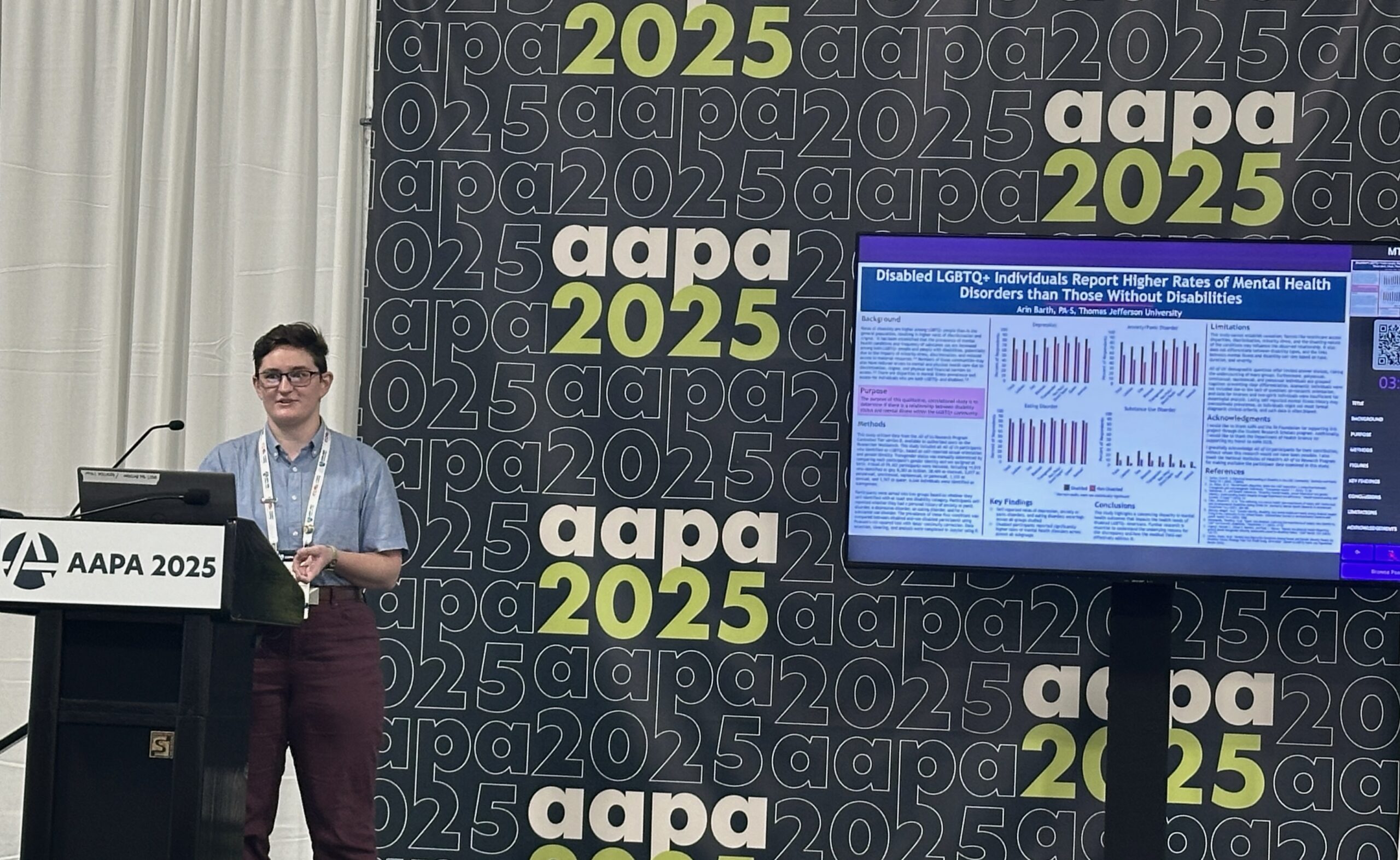
Need some inspiration? Arin Barth, AAPA 2025 ePoster presenter and AAPA 2024-2025 All of Us Research Scholar, shares thoughts on how research can help make an impact in patient communities:
Q: What specific gaps in healthcare access or outcomes motivated you to focus on vulnerable populations in your research?
A: The purpose of my research was to investigate the relationship between disability status and mental health within the LGBTQ community. In my background reading, it was clear that both of these communities, people with disabilities and the LGBTQ community, tend to have worse health outcomes and poorer mental health than the general population. However, most studies looked at them in isolation and didn’t consider whether participants who were both disabled and LGBTQ had different experiences.
Q: How do you ensure the voices and lived experiences of vulnerable communities are meaningfully integrated into your study design and methodology?
A: As a member of both of these communities myself, I knew it was important to incorporate community voices into this study’s development. I feel like my personal experiences were vital to developing the methodology for this study, and I consulted with other members of these communities at all stages in development in order to consider how different decisions regarding manipulation of the data prior to analysis would affect how study participants would be reflected in the results.
Q: How do you balance scientific rigor/interest with ethical responsibility when working with populations that may face heightened risks or stigmatization?
A: I feel like scientific rigor and ethical responsibility go hand in hand for research involving vulnerable communities. Part of rigor is, or at least should be, seeking to represent research participants as accurately as possible, with findings that are truly representative of the communities being researched, including all of the various cultural, economic, and historical factors that may be contributing to the relationships being studied. Findings need to be analyzed and interpreted within their context in order to both uphold the ethical responsibility towards the communities in question and to ensure that researcher bias is minimized and the conclusions are accurate and reliable as a foundation for future studies.
Related links:
Digital ePosters from AAPA 2020 to AAPA 2025
JAAPA Collections and AAPA 2025 Poster Abstracts
AAPA 2025 Research in Action and Research Rounds On Demand
Resource Highlight
Looking for research CME?
AAPA collaborates with experts to offer free CME so PAs and PA students can learn about research and enhance their clinical work. In August 2025 we launched new course offerings related to clinical trials, using R, grant writing, and more. Learn more here, and be on the lookout for our new set of courses next year!
Latest AAPA Publications
Thanks to your survey responses, we can include the latest data in our research reports, publications, News Central articles, and extended data briefs. Check out a sample of our latest publications below:
PAs’ experience with violence and biasLike other healthcare providers, PAs experience interpersonal violence and biased behavior from the patients they interact with. Almost 90% of PAs experience some form of bias from their patients in 2022 – with female PAs encountering these challenges more than their male counterparts. Our recently published study on PAs’ experience with violence and bias illustrates the association between personal characteristics of PAs and their likelihood of encountering violence and bias from patients in clinical settings.
Data Brief: Caring for Diverse Patient PopulationsYour responses to the 2025 AAPA Salary and Student Surveys allowed us to tak an in-depth look at PAs and PA students perceived comfort and preparedness when caring for diverse patient populations. in our data brief to learn how PAs are developing culturally competent healthcare.
Want more publications? Visit sb1.aapa.org/research/research-publications/.