Clinical Resource Library Database
Use this searchable database to quickly find tools and resources to help you improve patient health.
The New Anti-Obesity Drugs: What You Should Know
This article by the Cleveland Clinic covers important topics for patients to know about anti-obesity drugs, including their effectiveness and side effects.
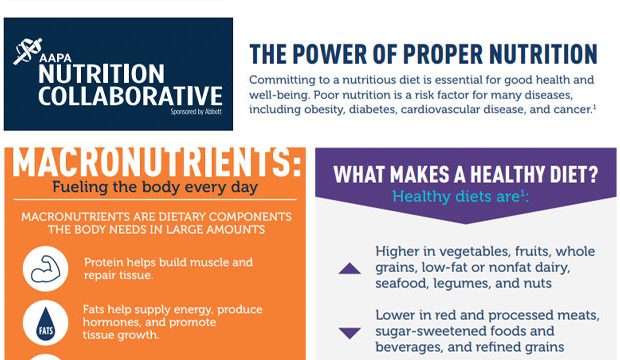
The Power of Proper Nutrition
Help your patients learn the basics of building a healthy diet, including how much of each food group to include in their daily diet. This two-page brochure also provides tips for making healthy substitutions for snacks that may be sabotaging their weight loss journey.

The Role of PAs in the Management of Patients with Alzheimer’s Disease and Other Dementias
This brief synthesizes findings from a national survey and a focus group to identify key challenges and policy opportunities to empower PAs across the dementia care continuum.
The Role of Peer Support Specialists in Preventing Prescription Opioid Misuse
In this Vital Minds episode, host James Millward, DMSc, PA-C interviews Richard Bottner, DHA, PA-C, CPHQ, and Jessi Davis, MHPS, RSPS. Vital Minds is a podcast of the PA Foundation.
The role of SGLT2 inhibitors in managing type 2 diabetes
The sodium glucose cotransporter 2 (SGLT2) inhibitors canagliflozin, dapagliflozin, empagliflozin, and ertugliflozin represent a novel class of medications to manage type 2 diabetes through urinary excretion of glucose.
The roles of neuroinflammation and glutamatergic excitotoxicity in treatment-resistant depression
This article reviews the pathologic pathways of glutamate excess in the central nervous system and how they may be implicated in the underlying disorder of treatment-resistant depression and targeted for treatment.
The SNAP treatment approach for children with acute otitis media
Acute otitis media usually resolves spontaneously, and the SNAP approach takes advantage of that, helping children to avoid antibiotic side effects and combating antibiotic resistance.
The Status of HIV in 2025 – Monograph
This activity will provide an update on what every PA needs to know about HIV in 2025. While HIV medicine has evolved significantly during the past four decades, over 35,000 HIV infections occur annually in… more
The ups and downs of weight loss
Increasing rates of overweight and obesity in the United States have resulted in increasing calls for weight loss. Clinicians should be aware of the risks associated with weight cycling when recommending weight loss. Lifestyle modifications can reduce risks associated with obesity and are more readily measured.
Tips for Health Care Practitioners: Helping Survivors Cope with Grief After a Disaster or Traumatic Event
Created by the Substance Abuse and Mental Health Services Administration (SAMHSA), this fact sheet provides health care practitioners with guidelines for communicating with survivors experiencing grief.
Tirzepatide
Obesity affects a large percentage of patients in the United States and is associated with increased mortality and higher healthcare costs. This article discusses tirzepatide as a treatment for obesity.
Top 10 De-Escalation Tips for Health Care Professionals
These 10 de-escalation tips from the Crisis Prevention Institute (CPI) provide strategies and techniques to help you respond to difficult behavior in the safest, most effective way possible.
Top Weight Loss Medications
This article by the Obesity Medicine Association provides information on the most commonly prescribed weight loss medications.
Toward more personalized breast cancer risk assessment
Healthcare providers often are uncertain about how best to assess and manage breast cancer risk. This article helps clinicians stratify breast cancer risk and discusses a newer genomic test, the polygenic risk score, that may enable more personalized risk management and decision-making.
Treating acute migraine with ubrogepant
Acute migraine affects millions of people and is one of the most common primary care complaints in the United States. This article describes the use of ubrogepant, a new CGRP receptor antagonist, in a patient with contraindications to traditional medications used for acute migraine.